How Marking a Child with an IEP Affects Frameworks and Measures
When a child is identified as having an Individualized Education Program (IEP), Learning Genie automatically adjusts their DRDP assessment to meet state requirements and reduce manual work for educators. This ensures compliance with DRDP mandates and helps you focus more on supporting each child’s development.
Here’s what changes and why:
1. Why It Matters: DRDP Rules for IEP Children
Per California’s Department of Education (CDE) and Social Services (CDSS), children with IEPs must be assessed using specific measures that are not included in every DRDP view. These measures are essential for observing developmental areas related to special education needs and are only available in the Fundamental and Comprehensive Views—not the Essential View.
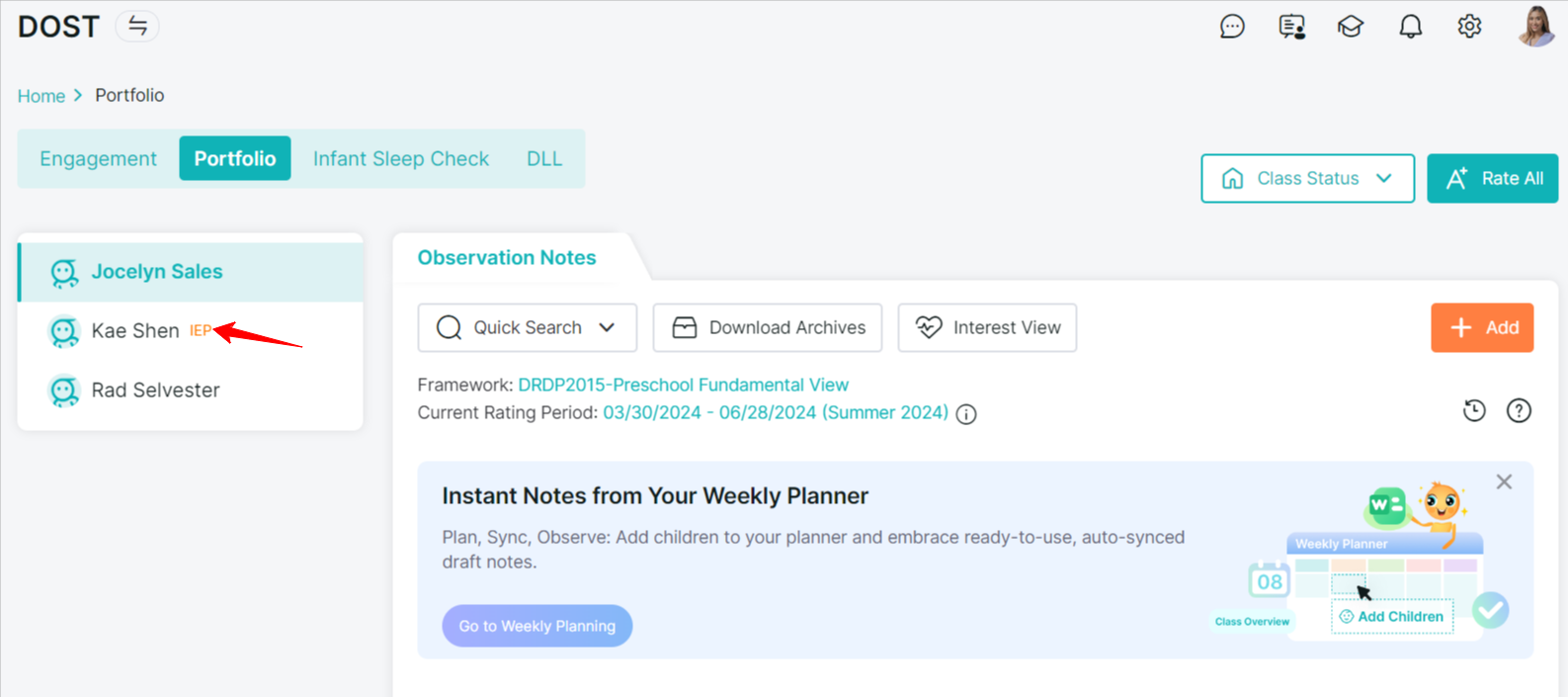
2. IEP Tag on the Child’s Profile
Once a child is marked with an IEP in the Additional Information tab, Learning Genie automatically:
Adds an IEP tag to the child’s profile thumbnail.
Makes the tag visible across the platform for easy identification.
Helps teachers know when to apply special assessment considerations.
Related articles:
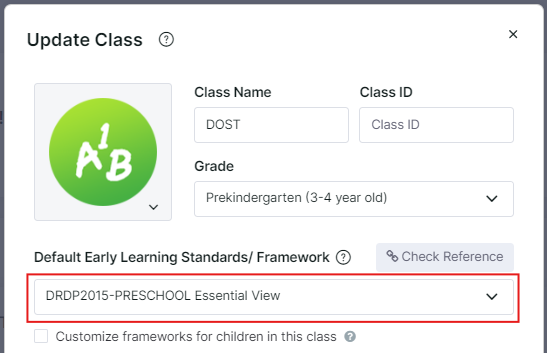
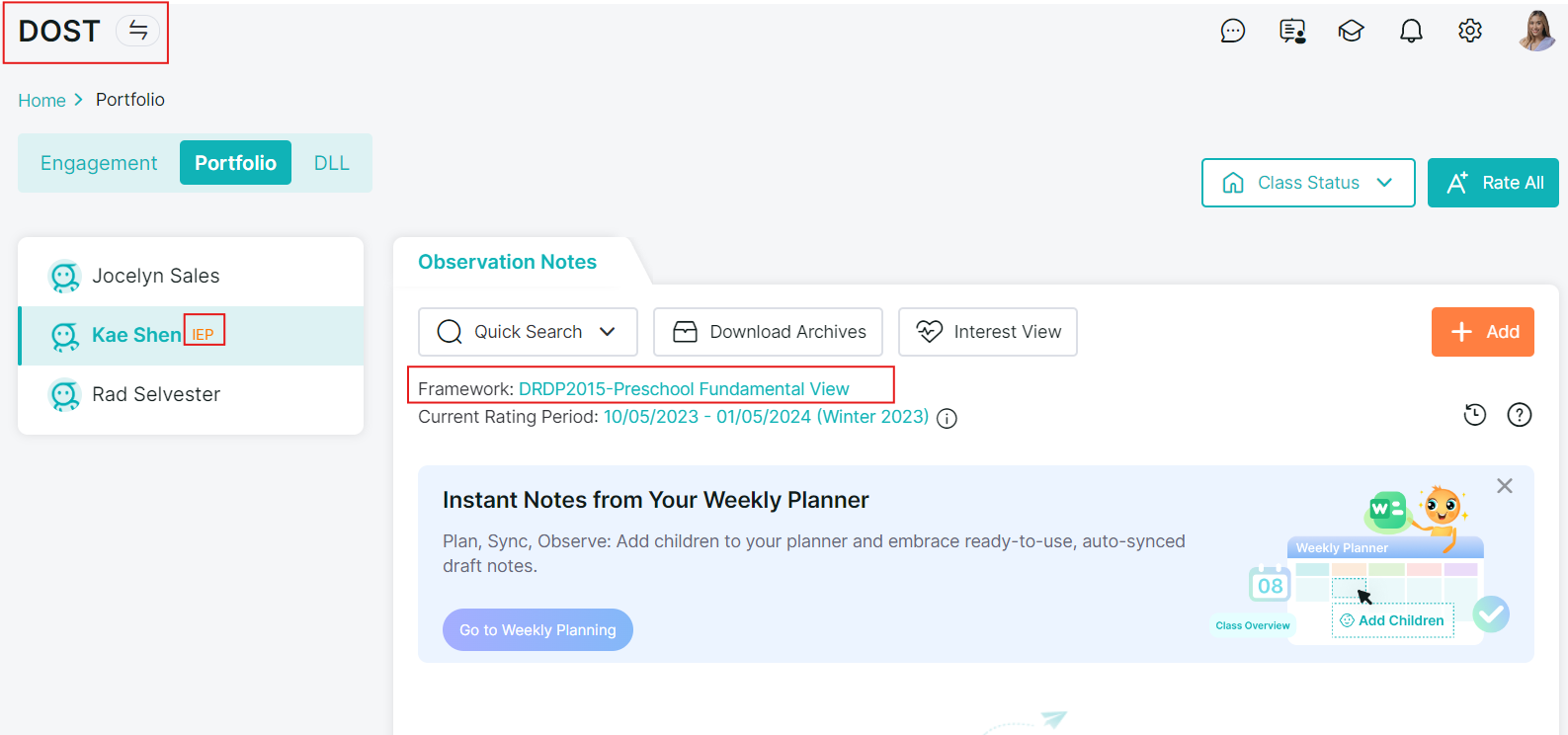
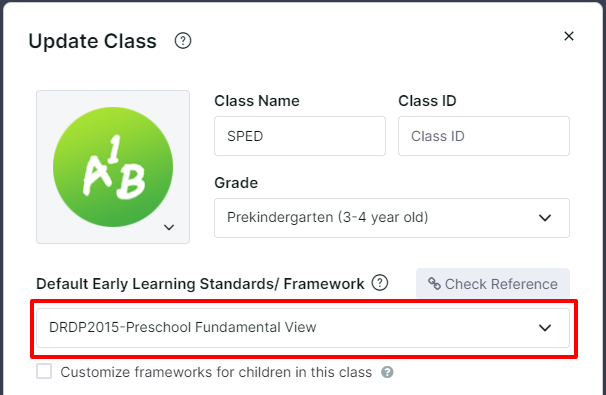
3. Automatic switch from Preschool Essential View to Fundamental View.
a. Using DRDP 2015 Preschool Essential View?
The system will automatically switch the IEP child to the Fundamental View.
Why? The Essential View doesn’t include all required IEP measures.
b. Using DRDP 2015 Preschool Comprehensive View?
No changes needed—this view already includes all required measures for IEP children.
4. Conditional Measures: What You’ll See
IEP children must be observed and rated on specific “conditional” measures.
For Children Without IEPs: Learning Genie will automatically create a note to remind you that certain assessment measures are optional. These measures will have a temporary "Conditional" rating. If you observe these behaviors in the child, you can always go back and add a real rating.
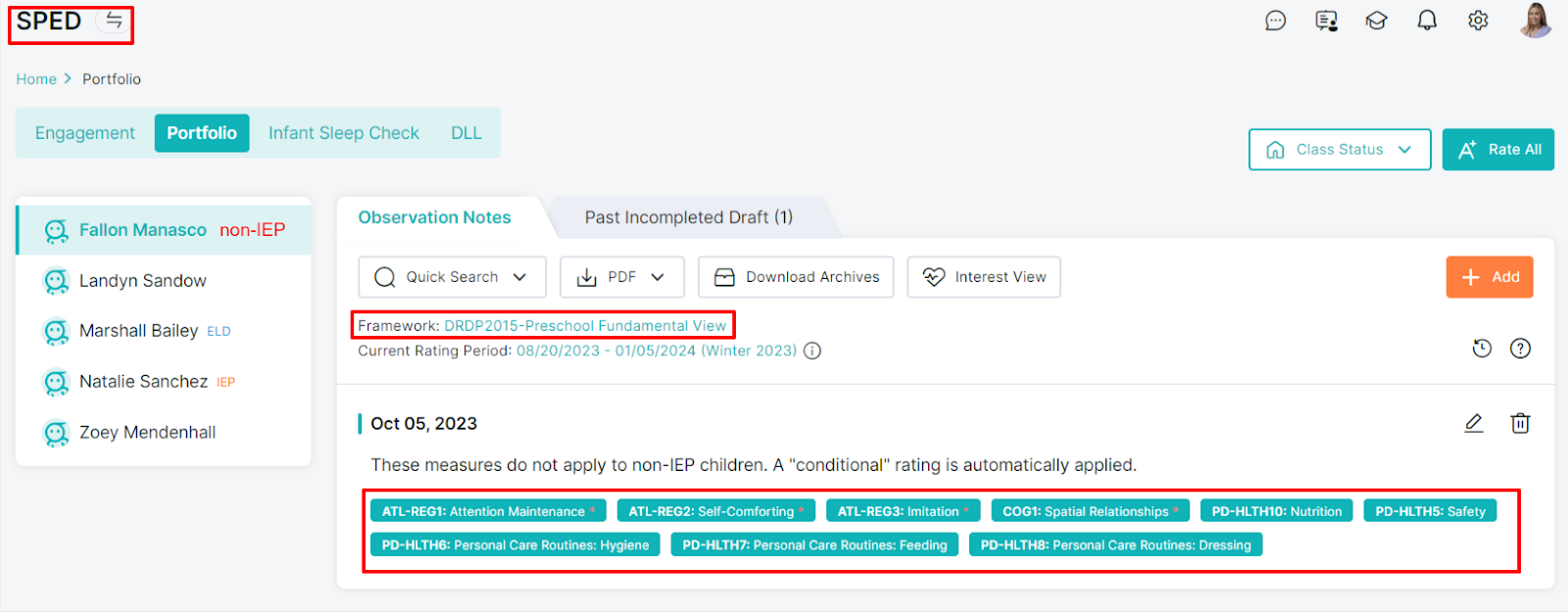
This automation ensures all required measures are captured—without creating extra work.
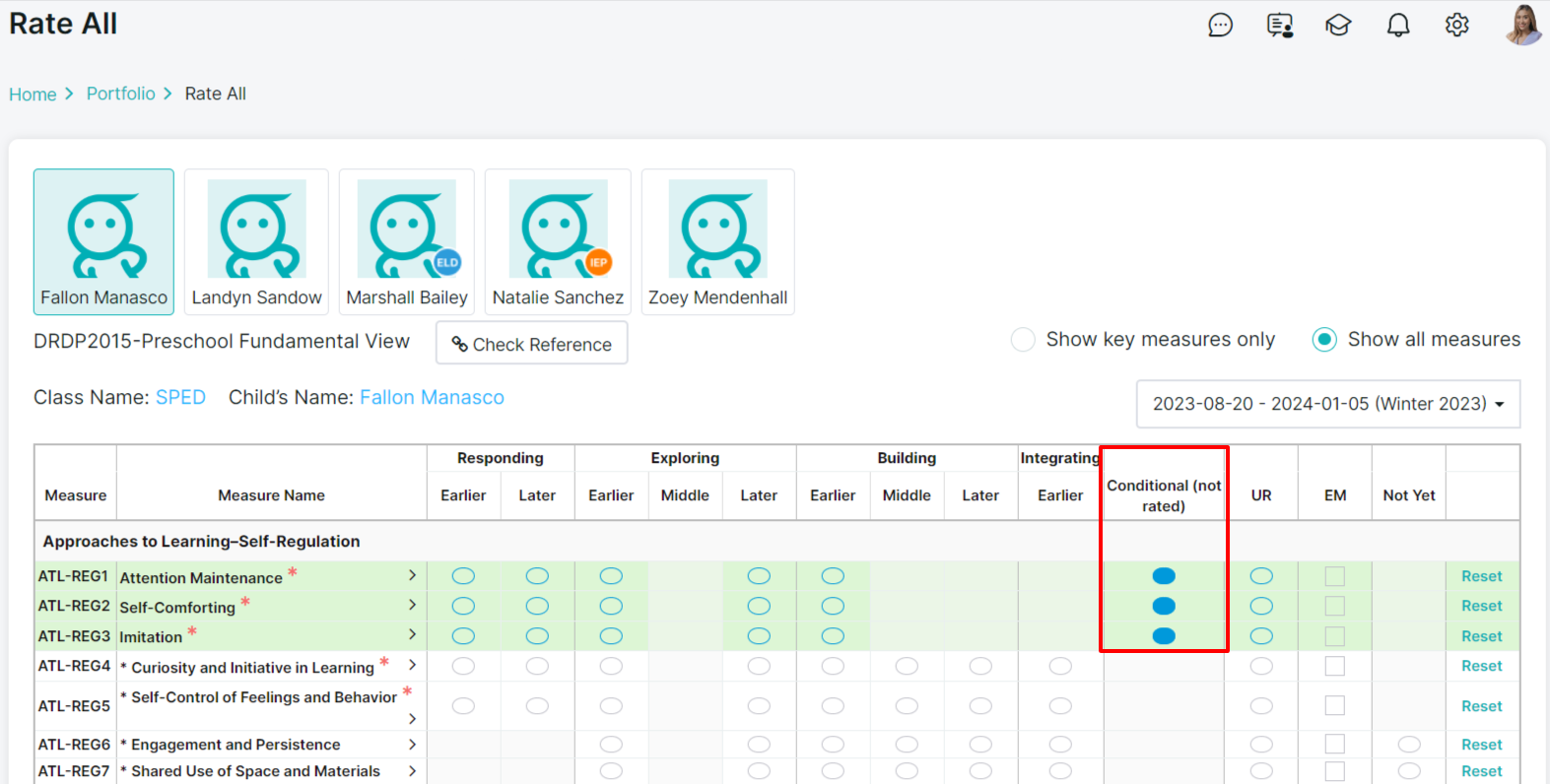
Note: This automation is activated upon request. If you'd like to enable it for your account, simply reach out to us, and we’ll be happy to turn it on for you.
Summary
Marking a child with an IEP in Learning Genie triggers important changes:
Assigns the proper DRDP framework
Adds necessary IEP-specific measures
Streamlines the observation and rating process
Keeps you compliant with DRDP requirements
This means less time spent managing assessments—and more time supporting each child’s growth.
Disclaimer: These framework adjustments apply to DRDP (2015) only. They should not be interpreted as DRDP (2025) framework-selection rules.
DRDP (2025): How IEP/IFSP Status Affects Assessment Measures
DRDP (2025) uses age- and grade-appropriate assessment views: Infant/Toddler (IT) and Preschool–Transitional Kindergarten–Kindergarten (PTK). A child's IEP or IFSP does not automatically require switching to a different DRDP framework or view.
However, having an IEP or IFSP affects which conditional measures are required.
1. Required Conditional Health Measures
The official DRDP (2025) manual states that conditional measures in the Health (HLTH) domain are required for children with an IEP or IFSP.
Infant/Toddler (IT) View:
HLTH 1 – Safety
HLTH 3 – Personal Care Routines: Hygiene
HLTH 4 – Personal Care Routines: Feeding
HLTH 5 – Personal Care Routines: Self-Dressing
Preschool–Transitional Kindergarten–Kindergarten (PTK) View:
HLTH 3 – Personal Care Routines: Hygiene
HLTH 4 – Personal Care Routines: Feeding
HLTH 5 – Personal Care Routines: Self-Dressing
These measures are required for children with an IEP or IFSP. For children without an IEP or IFSP, educators may also complete them when useful for documenting progress or planning learning activities and supports. If they are not applicable for that purpose, the official instrument provides the appropriate not-rated option.
2. English Language Development (ELD) Conditional Measures – PTK View
The PTK View includes three conditional ELD measures:
ELD 1 – Comprehension of English (Receptive English)
ELD 2 – Self-Expression in English (Expressive English)
ELD 3 – Understanding and Responding to English Literacy Activities
These measures are for preschool, TK, and kindergarten children whose home language is a language other than spoken English and who are learning spoken English.
The ELD measures are not required simply because a child has an IEP or IFSP. Their applicability is determined by the child's language background and the conditions specified in the DRDP manual.
3. Understanding the Conditional Rating
A conditional measure is not the same as a Conditional rating.
Conditional measure: A measure assessed only when the specified conditions apply.
Conditional rating: A not-rated designation used when the measure does not apply under the instrument's instructions.
For children with an IEP or IFSP, the required HLTH measures must be assessed and should not be marked Conditional.
4. Rating Children with Disabilities
DRDP (2025) is designed to assess all children, including children with disabilities and developmental delays.
Educators should:
Base ratings on the child's observed knowledge, skills, and behaviors.
Consider observations from different settings, routines, and familiar adults.
Include skills demonstrated through accommodations, adaptive equipment, sign language, gestures, and augmentative and alternative communication (AAC).
Follow the developmental descriptors and rating instructions for the applicable assessment view.
Do not automatically assign the earliest developmental level because a child has a disability or IEP/IFSP.
5. Unable to Rate (UR)
UR is intended for situations in which the child has been absent for most or all of the four to six weeks before assessment submission, preventing sufficient observation.
The following are not valid reasons for UR:
The child's disability or the severity of the disability.
Not having enough time or enough information when the child has been present for most of the assessment period.
6. When the Child Does Not Demonstrate the Earliest Developmental Level
The PTK instrument provides a specific option, "Child is not yet at the earliest developmental level on this measure," for applicable later-development measures when the child has not demonstrated mastery of the earliest level.
This option is not a universal substitute for Conditional or UR and should only be used where the instrument provides it.
For conditional HLTH measures, educators should follow the specific rating options and instructions in the applicable IT or PTK instrument. Do not invent or assign a developmental level that is unsupported by observations.
For situations that remain unclear, consult the Desired Results Access Project or WestEd for official assessment guidance.
Need Help?
If you run into issues or have questions, the Learning Genie Support Team is here for you!
Email: help@learning-genie.com
Phone: 760-576-4822